Vascular & Blood Vessel Interventional Procedures | Interventional Vascular Peripheral Arterial Procedures
Angiography / Stent Placement | Age: Adults | Geriatrics
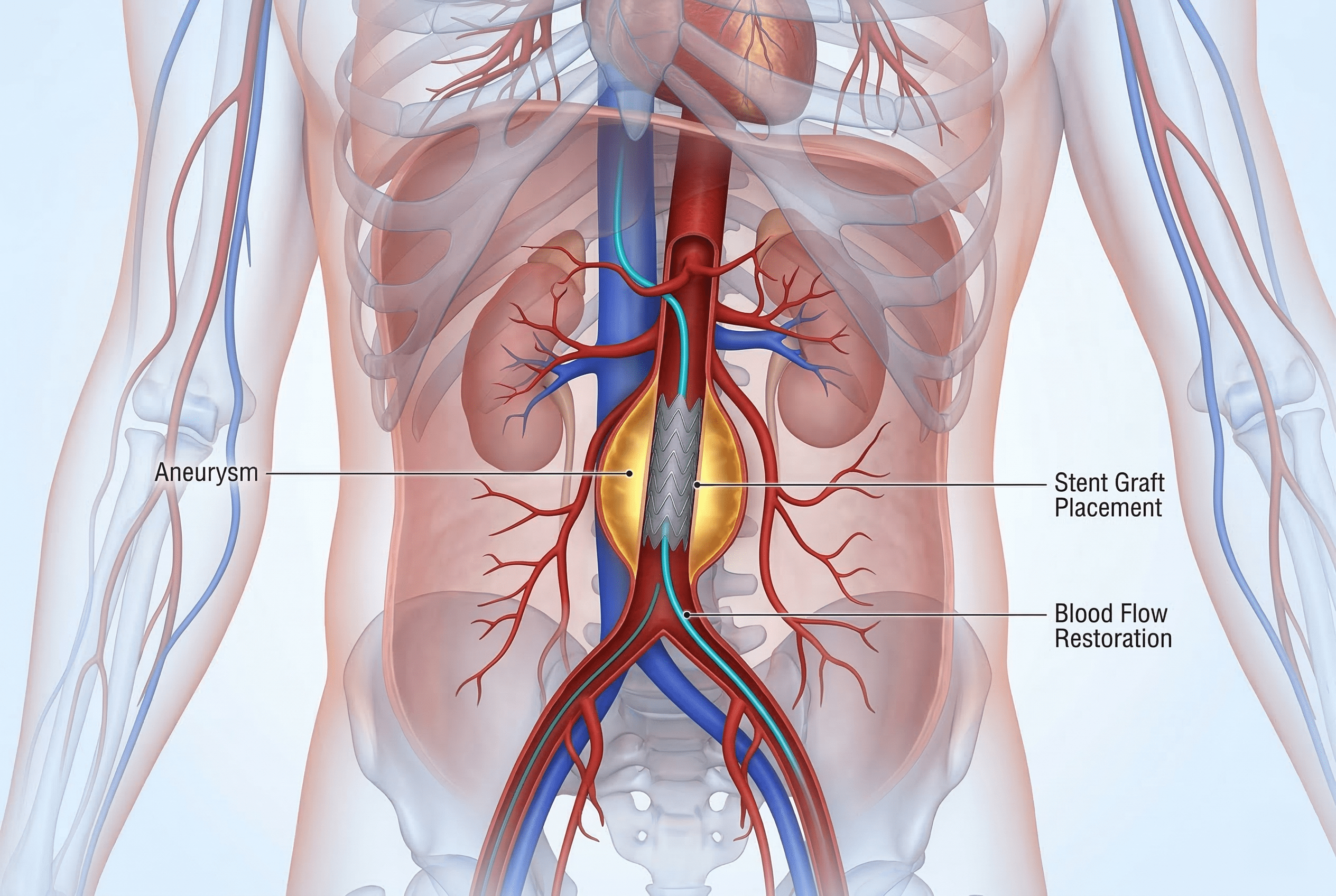
Endovascular Aneurysm Repair (EVAR) and Thoracic Endovascular Aneurysm Repair (TEVAR) are minimally invasive procedures used to treat weakened, bulging areas of the aorta known as aortic aneurysms. Using advanced imaging guidance, a stent graft is delivered through blood vessels to reinforce the aorta from within, preventing rupture and restoring safe blood flow. These catheter-based treatments avoid large surgical incisions and significantly reduce recovery time compared to open surgery.
EVAR is typically used for abdominal aortic aneurysms, while TEVAR treats aneurysms in the chest (thoracic aorta). Both procedures offer effective, durable aneurysm repair with lower complication risk, making them ideal for patients who are elderly, high-risk, or seeking a less invasive alternative to open aortic surgery.
Internal links: Vascular & Blood Vessel Interventional Procedures, Interventional Vascular Peripheral Arterial Procedures, Angiography / Stent Placement
EVAR and TEVAR are well-established and generally safe when performed by experienced vascular and interventional specialists. Possible risks include bleeding, endoleak (persistent blood flow around the graft), infection, or need for future monitoring. Regular follow-up imaging is essential to ensure long-term success and patient safety.
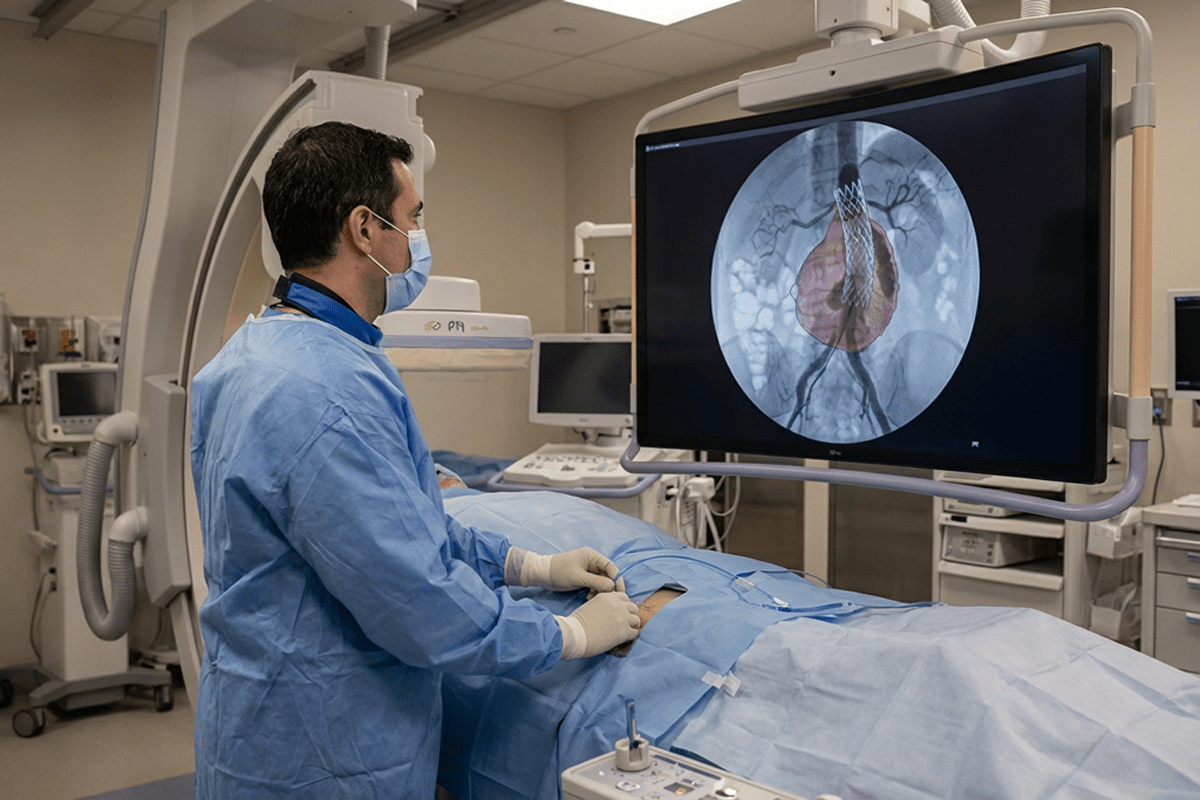
EVAR treats abdominal aortic aneurysms, while TEVAR is used for aneurysms in the thoracic (chest) aorta. Both use stent grafts placed through blood vessels.
For many patients, yes. EVAR and TEVAR have lower complication rates, shorter hospital stays, and faster recovery compared to open surgery.
Stent grafts are designed for long-term durability. Lifelong follow-up imaging is important to monitor graft position and function.
Patients with suitable aneurysm anatomy who want a minimally invasive option or are high-risk for open surgery are often good candidates.
With a commitment to patient comfort, our clinic combines cutting-edge interventional radiology with compassionate care.
connect@drsudhirvasistha.com
Copyright © 2026 All Rights Reserved. Dr. Sudhir Vasistha | Design, Developed & Powered by Better Choice