Vascular & Blood Vessel Interventional Procedures | Interventional Vascular Venous Procedures
Injection of Clot-dissolving Medicines | Age: Adults | Geriatrics
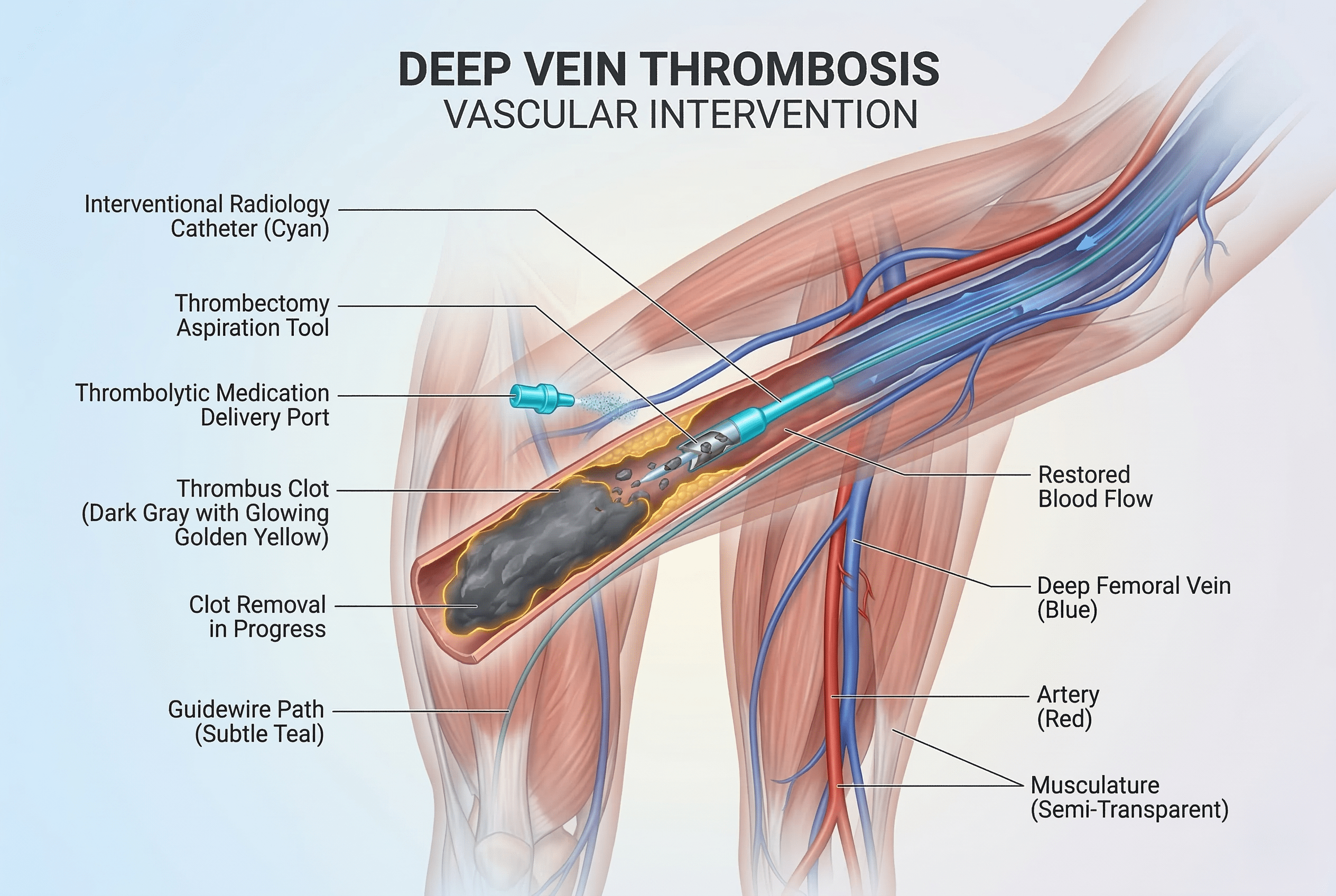
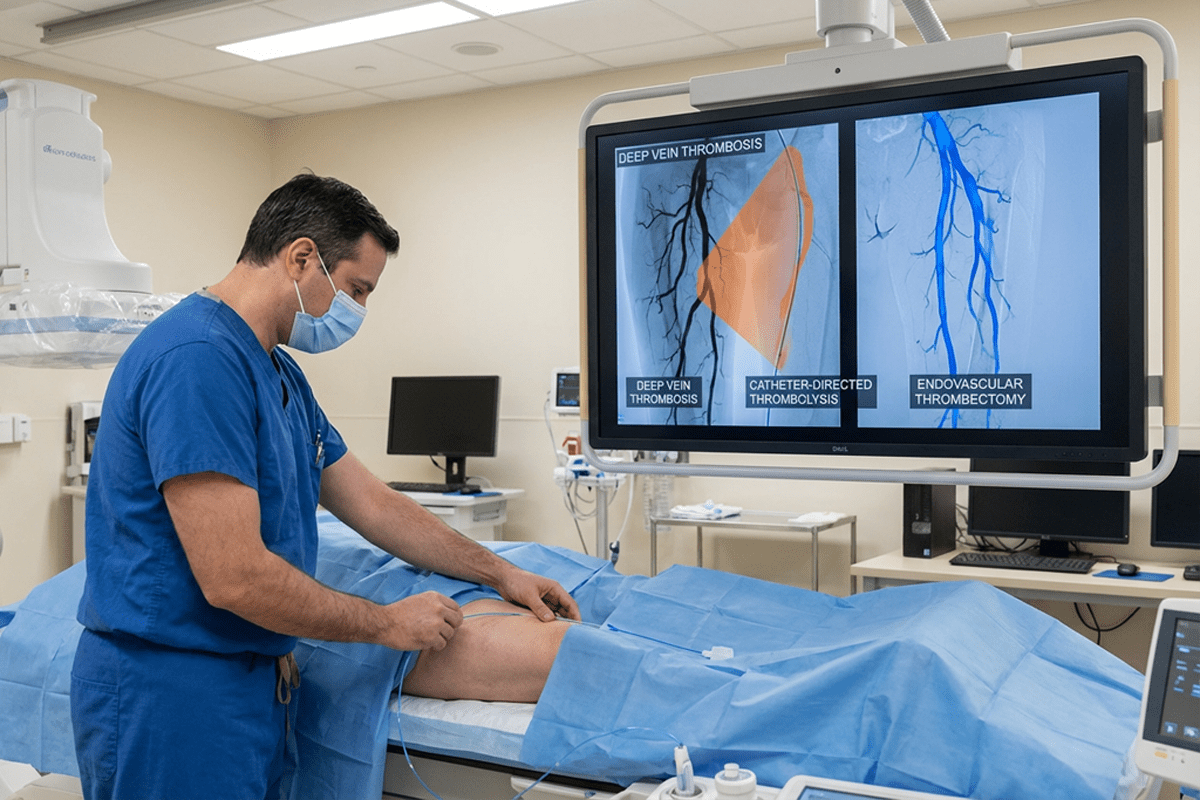
DVT management using thrombolysis and thrombectomy is a minimally invasive interventional radiology approach to treat deep vein thrombosis, a condition where blood clots form in deep veins, commonly in the legs. These advanced endovascular treatments restore blood flow by dissolving or physically removing clots, reducing pain, swelling, and the risk of long-term complications such as post-thrombotic syndrome or limb ischemia.
Catheter-directed thrombolysis delivers clot-dissolving medication directly into the blockage, while thrombectomy removes large or resistant clots using specialized devices. Together, these techniques provide rapid symptom relief, preserve vein function, and help prevent serious complications without the need for open surgery.
Internal links: Vascular & Blood Vessel Interventional Procedures, Interventional Vascular Venous Procedures, Injection of Clot-dissolving Medicines
DVT thrombolysis and thrombectomy are safe and well-established when performed by experienced interventional specialists. Possible risks include bleeding, bruising at the access site, or reaction to clot-dissolving medications. Careful patient selection and imaging guidance help minimize complications and improve outcomes.
It is typically recommended for extensive or severe DVT, especially when symptoms are significant or limb circulation is threatened.
Thrombolysis dissolves clots using medication, while thrombectomy physically removes clots. Both may be combined for optimal results.
It reduces immediate clot burden and vein damage, but long-term prevention may require medications and lifestyle changes.
Many patients experience rapid improvement in pain and swelling within days after the procedure.
With a commitment to patient comfort, our clinic combines cutting-edge interventional radiology with compassionate care.
connect@drsudhirvasistha.com
Copyright © 2026 All Rights Reserved. Dr. Sudhir Vasistha | Design, Developed & Powered by Better Choice