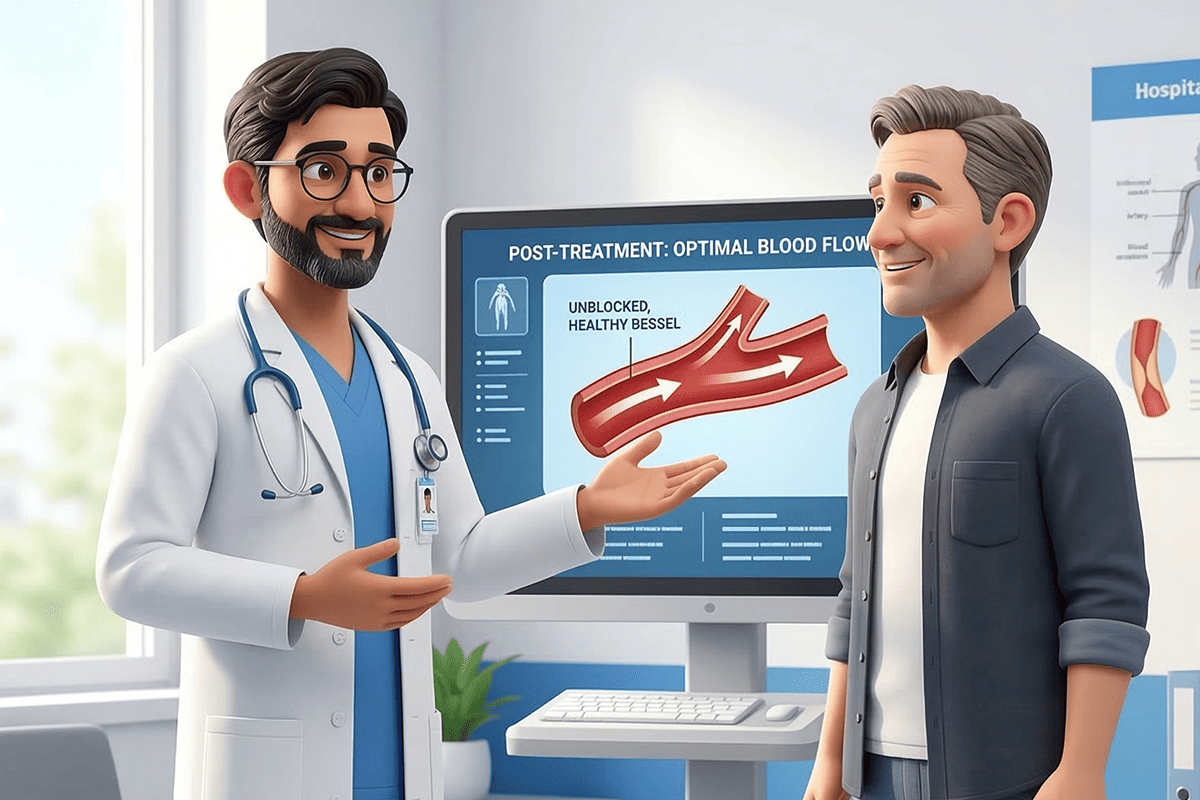
Lungs & Chest (Thoracic) Interventional Procedures | Interventional Lymphatic Procedures
Embolization | Age: Adults
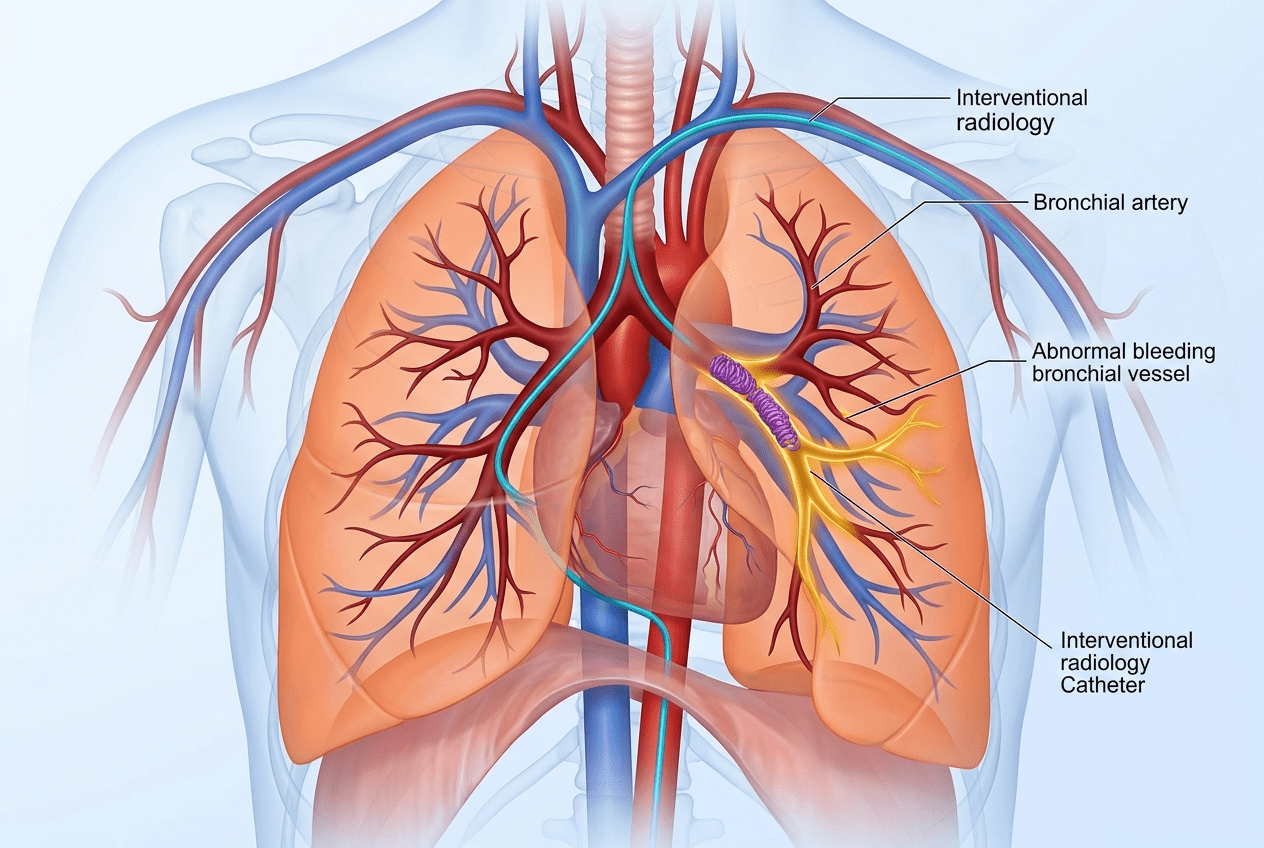
Bronchial artery embolization (BAE) is a minimally invasive interventional radiology procedure used to control active or recurrent lung bleeding, also known as hemoptysis. Using real-time imaging guidance, an interventional specialist identifies abnormal bronchial arteries responsible for bleeding and selectively blocks them using embolic materials. This targeted approach rapidly controls pulmonary hemorrhage while preserving healthy lung tissue and avoiding open chest surgery.
BAE is commonly performed in emergency or urgent settings for patients with moderate to severe hemoptysis. It offers fast symptom relief, stabilizes breathing, and is especially beneficial for patients who are poor surgical candidates or have underlying lung disease.
Internal links: Lungs & Chest (Thoracic) Interventional Procedures, Interventional Lymphatic Procedures, Embolization
Bronchial artery embolization is a well-established and generally safe procedure when performed by experienced interventional radiologists. Temporary chest discomfort, fever, or difficulty swallowing may occur. Serious complications are rare, and careful imaging guidance helps minimize risk while ensuring effective bleeding control.
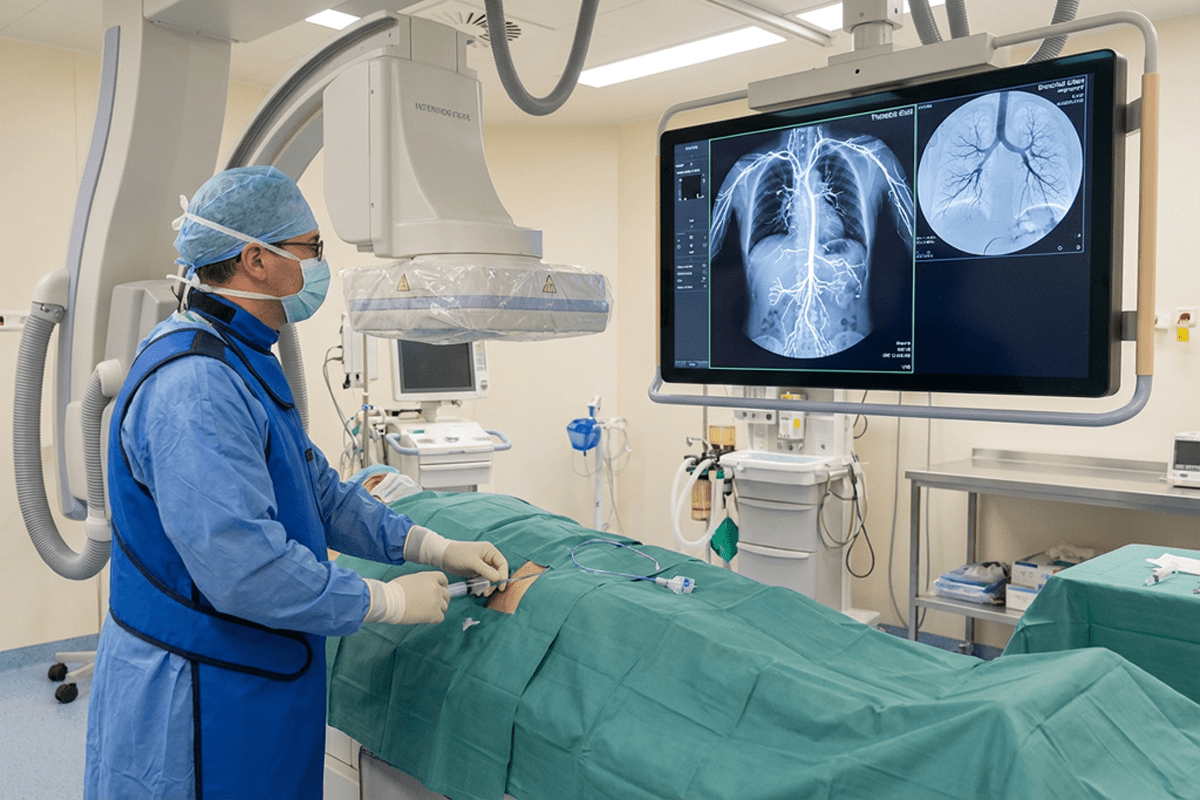
BAE is highly effective in rapidly controlling lung bleeding, especially in moderate to severe hemoptysis. Many patients experience immediate symptom relief.
In some cases, bleeding may recur due to underlying lung disease. The procedure can often be safely repeated if needed.
For most patients, yes. It avoids open chest surgery and is better tolerated, particularly in those with compromised lung function.
Recovery is usually quick. Many patients return to normal activities within a few days under medical guidance.
With a commitment to patient comfort, our clinic combines cutting-edge interventional radiology with compassionate care.
connect@drsudhirvasistha.com
Copyright © 2026 All Rights Reserved. Dr. Sudhir Vasistha | Design, Developed & Powered by Better Choice