Women’s Health Interventional Procedures | Interventional Pelvic Congestion & Pain Procedures
Embolization | Age: Adults
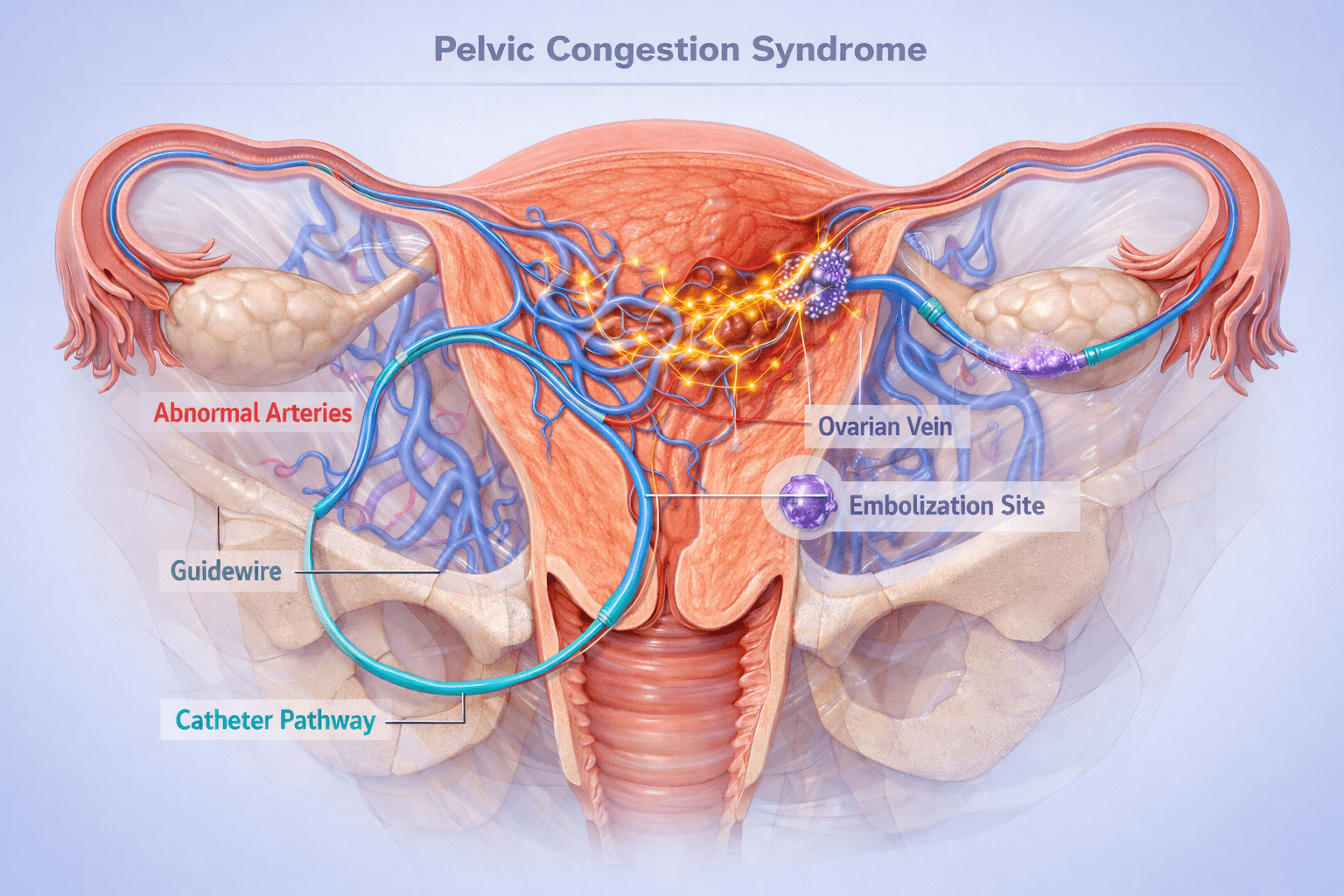
Pelvic Congestion Syndrome (PCS) management involves minimally invasive, image-guided interventional radiology treatments designed to relieve chronic pelvic pain caused by dilated and refluxing pelvic veins. Using catheter-based techniques, abnormal pelvic and ovarian veins are treated with embolization to block faulty blood flow, reduce venous pressure, and alleviate persistent pain symptoms. This approach targets the root cause of PCS without open surgery, offering effective and long-lasting relief.
These outpatient procedures are especially beneficial for women who experience chronic pelvic pain that worsens after prolonged standing, during menstruation, or following pregnancy. Pelvic vein embolization provides a uterus-sparing, low-risk alternative to surgical vein ligation or hysterectomy, with faster recovery and high success rates.
Internal links: Women’s Health Interventional Procedures, Interventional Pelvic Congestion & Pain Procedures, Embolization
Pelvic vein embolization is a safe and well-established treatment when performed by experienced interventional radiologists. Temporary pain, bruising, or nausea may occur after embolization. Rare risks include infection, coil migration, or recurrence of symptoms. Careful imaging guidance and follow-up ensure safe outcomes.
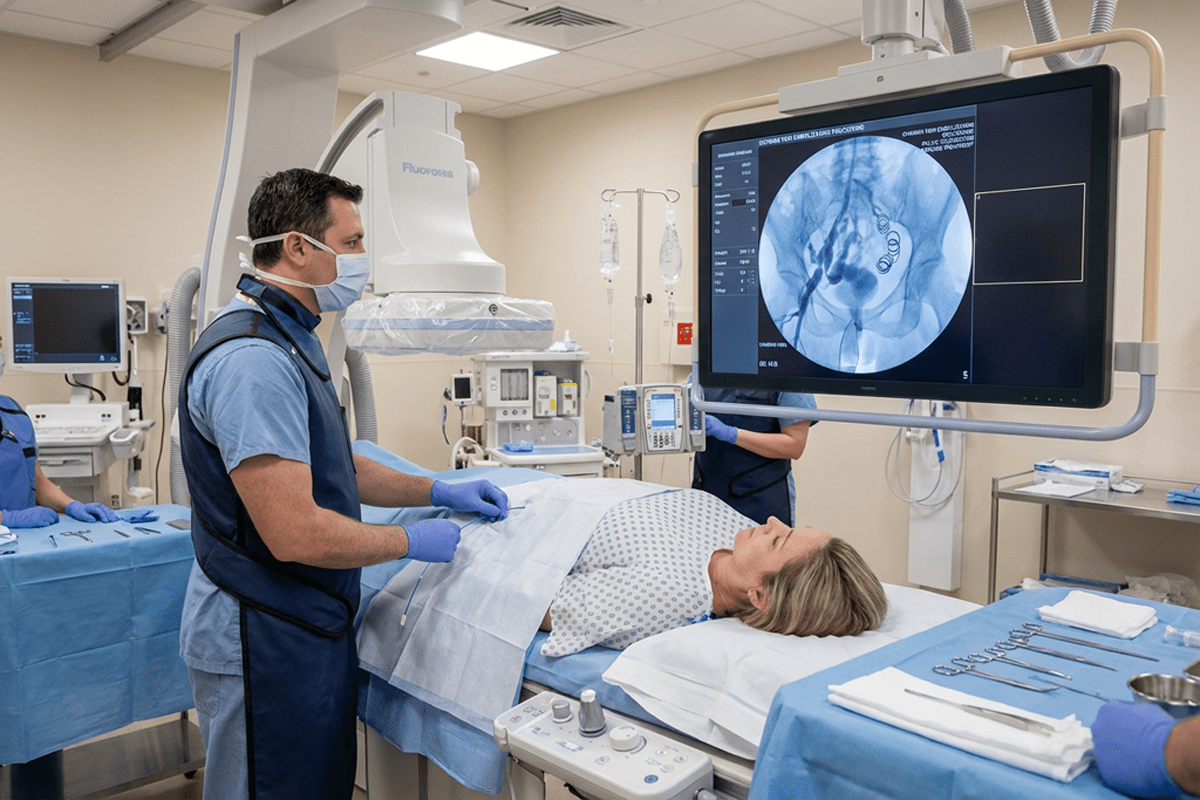
PCS is caused by weakened or refluxing pelvic veins that lead to blood pooling and increased venous pressure, resulting in chronic pelvic pain.
Most patients experience significant and lasting relief from pelvic pain following embolization, with high satisfaction rates.
Some patients notice improvement within days, while others experience gradual relief over several weeks.
Pelvic vein embolization preserves reproductive organs and does not negatively impact fertility in most patients.
With a commitment to patient comfort, our clinic combines cutting-edge interventional radiology with compassionate care.
connect@drsudhirvasistha.com
Copyright © 2026 All Rights Reserved. Dr. Sudhir Vasistha | Design, Developed & Powered by Better Choice