Women’s Health Interventional Procedures | Interventional Gynecology Procedures
Angioplasty | Age: Adults
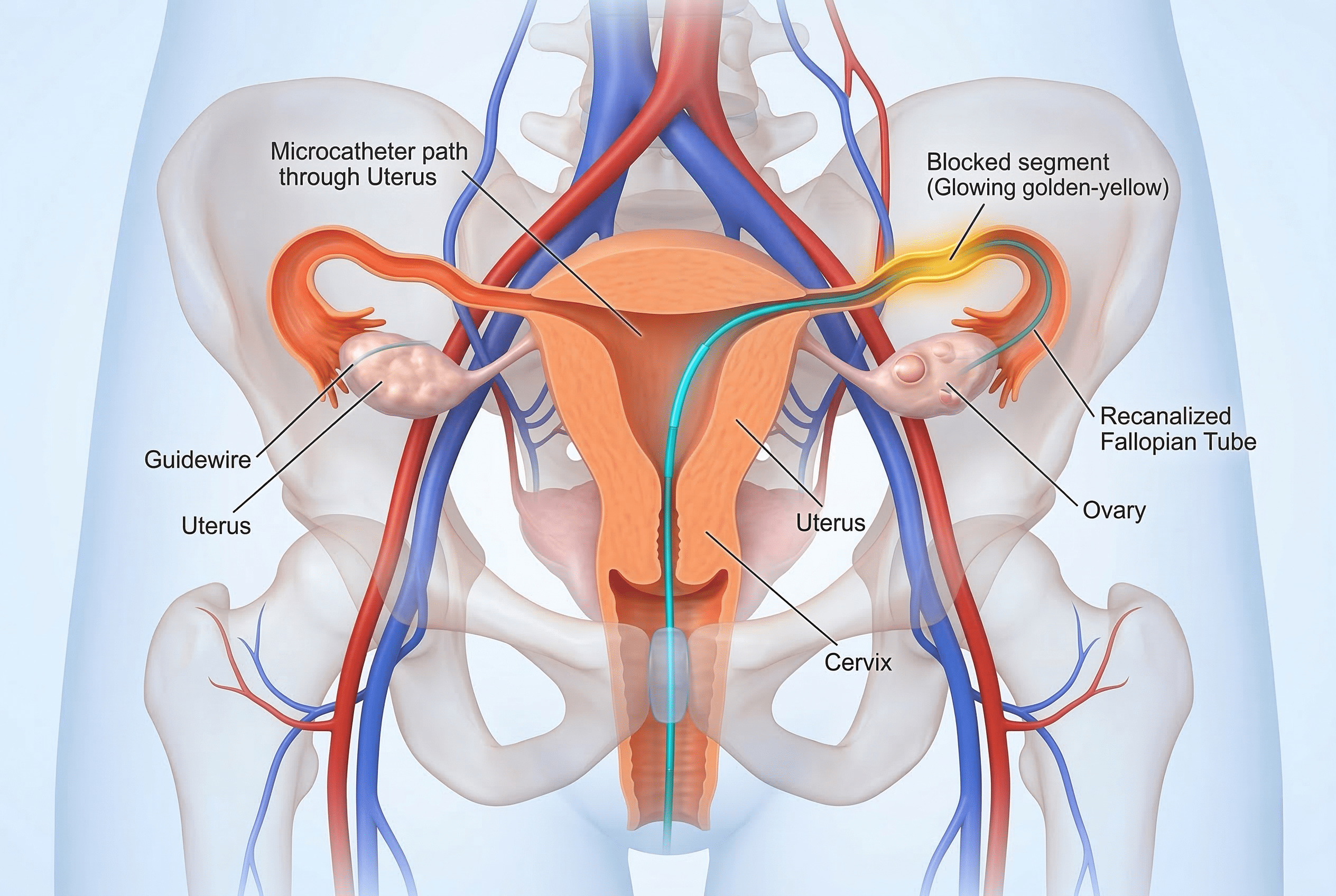
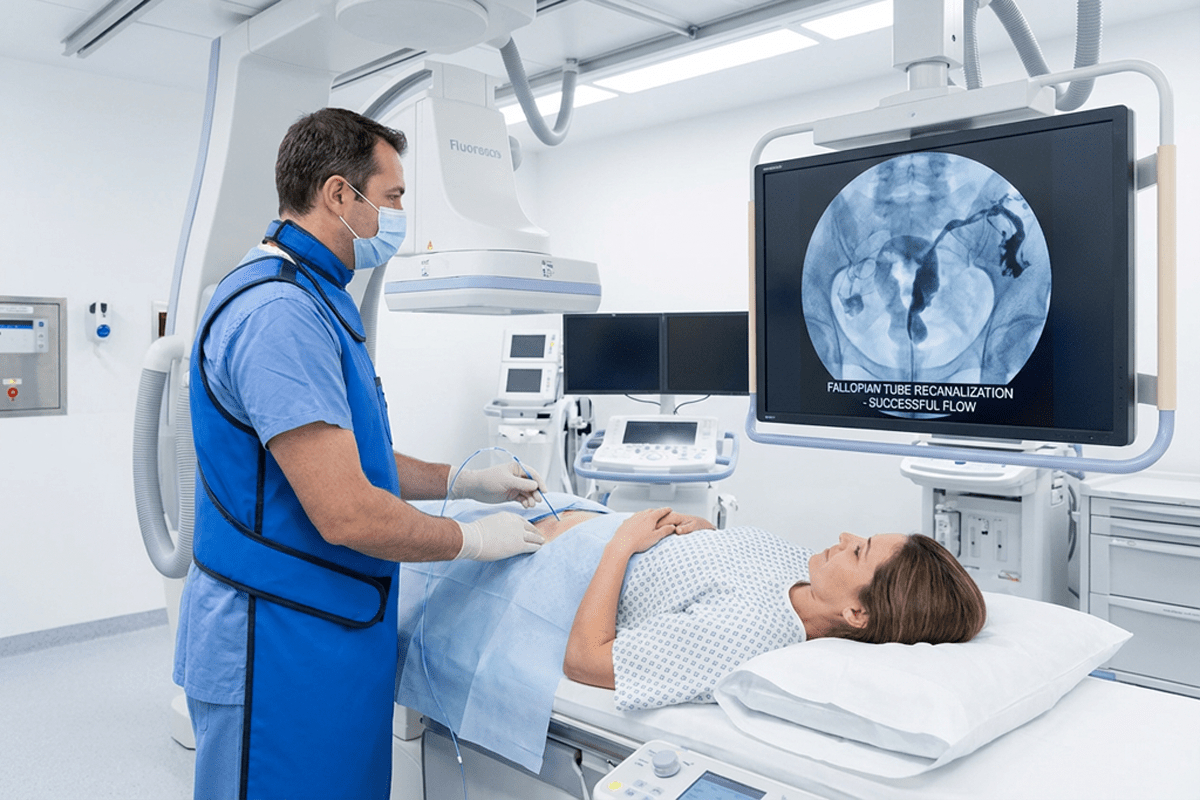
Fallopian tube recanalization is a minimally invasive interventional radiology procedure used to diagnose and treat blocked fallopian tubes, a common cause of female infertility. Using real-time imaging guidance, a tiny catheter and guidewire are gently advanced through the uterus into the fallopian tubes to open blockages and restore normal tubal patency. This targeted approach improves the chance of natural conception without the need for surgery.
The procedure is especially effective for women with proximal tubal blockage caused by mucus plugs, inflammation, or mild scarring. Performed as an outpatient procedure, fallopian tube recanalization offers a safe, fertility-preserving alternative to surgical tubal repair or assisted reproductive techniques.
Internal links: Women’s Health Interventional Procedures, Interventional Gynecology Procedures, Angioplasty
Fallopian tube recanalization is considered safe when performed by experienced interventional radiologists. Mild cramping or spotting may occur temporarily. Rare risks include infection, re-blockage of the tube, or tubal injury. Careful imaging guidance and follow-up help ensure safety and optimal fertility outcomes.
Yes, many women achieve improved fertility after the procedure, especially when blockage is the primary cause of infertility.
Most patients experience only mild discomfort or cramping. Pain is usually brief and well tolerated.
Pregnancy may occur within the first few months if no other infertility factors are present.
In some cases, re-blockage may occur over time. Follow-up care and early attempts at conception are often recommended.
With a commitment to patient comfort, our clinic combines cutting-edge interventional radiology with compassionate care.
connect@drsudhirvasistha.com
Copyright © 2026 All Rights Reserved. Dr. Sudhir Vasistha | Design, Developed & Powered by Better Choice