Vascular & Blood Vessel Interventional Procedures | Interventional Gastroenterology Procedures
Embolization | Age: Adults | Geriatrics
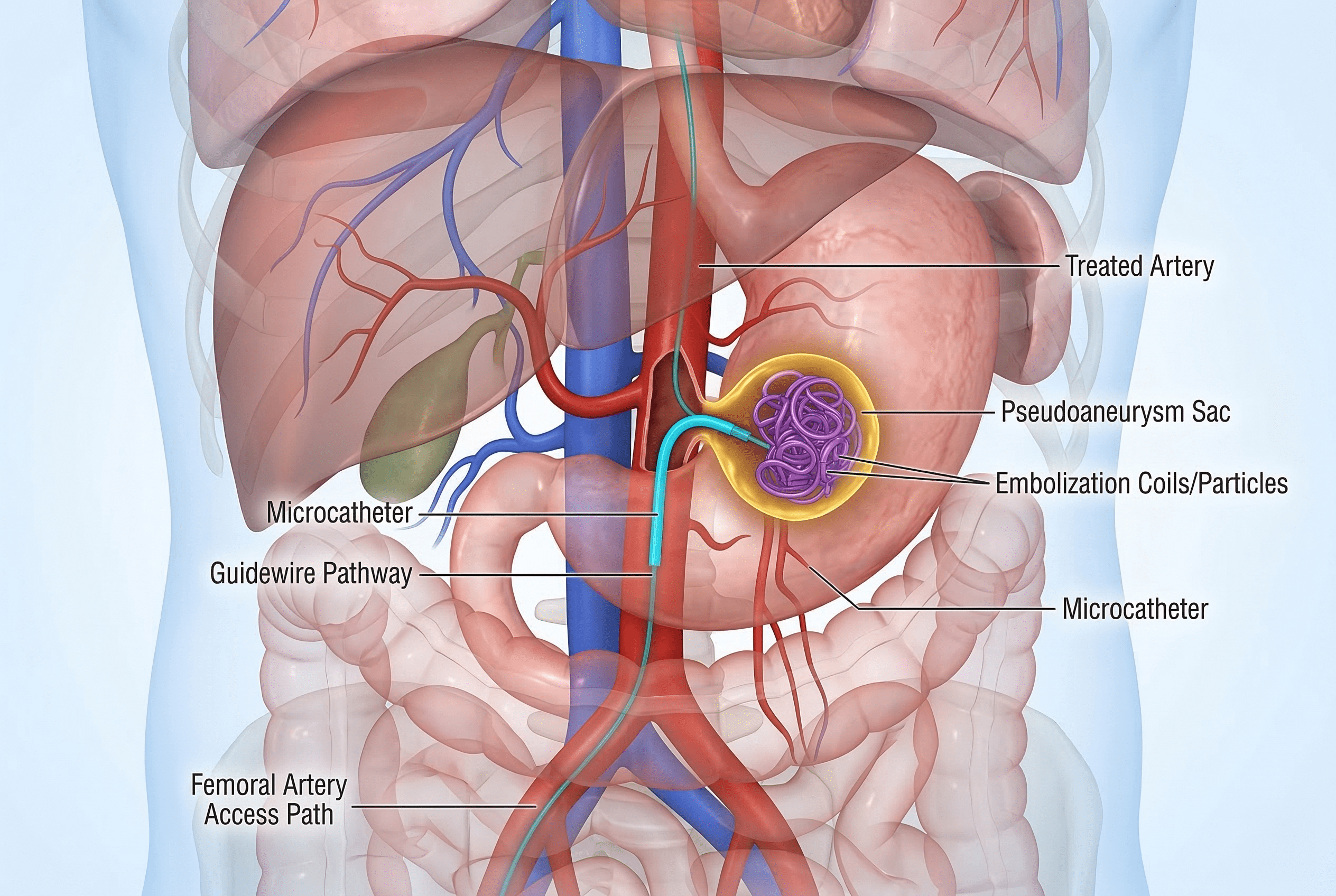
Peripheral and visceral pseudoaneurysm embolization is a minimally invasive endovascular procedure used to treat abnormal outpouchings of blood vessels caused by injury, surgery, inflammation, or infection. Unlike true aneurysms, pseudoaneurysms have a weakened vessel wall that carries a high risk of rupture and bleeding. Using image-guided catheter techniques, interventional specialists precisely deliver embolic materials to seal the pseudoaneurysm and stop abnormal blood flow while preserving nearby healthy vessels.
This advanced embolization treatment is commonly used for pseudoaneurysms involving visceral organs such as the liver, spleen, pancreas, kidneys, or peripheral arteries. It offers rapid bleeding control, avoids open surgery, and provides a safe, effective option for both emergency and elective management.
Internal links: Vascular & Blood Vessel Interventional Procedures, Interventional Gastroenterology Procedures, Embolization
Peripheral and visceral pseudoaneurysm embolization is a well-established and generally safe procedure when performed by experienced interventional radiologists. Possible risks include bruising at the access site, temporary pain, or rare vessel injury. Serious complications are uncommon, and precise imaging guidance helps ensure safety, accuracy, and durable results.
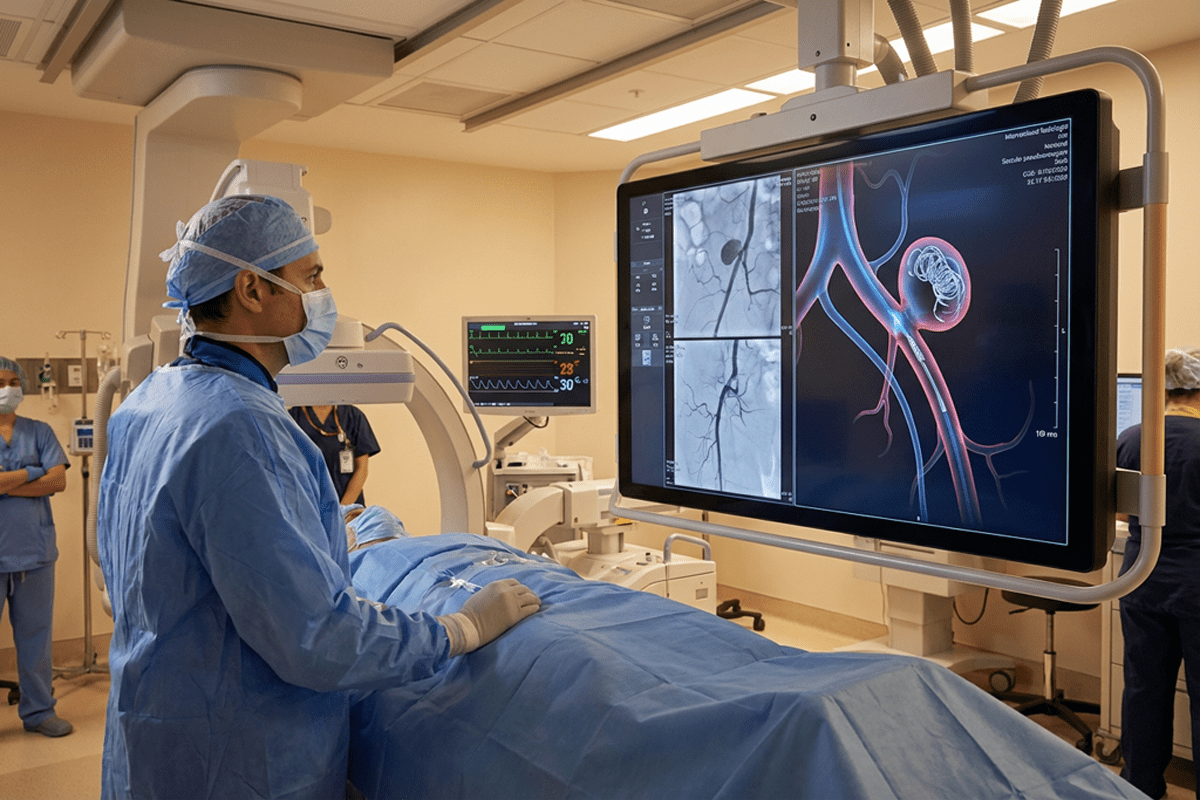
A pseudoaneurysm is a contained vessel injury that can rupture and cause serious bleeding. Embolization prevents rupture by sealing the abnormal vessel.
Yes, endovascular embolization is highly effective and often the preferred first-line treatment, especially for high-risk or unstable patients.
In many cases, yes. Embolization avoids large incisions, reduces recovery time, and is safer for patients with multiple medical conditions.
Most patients return to light activities within a few days. Your care team will provide specific guidance based on the treated vessel.
With a commitment to patient comfort, our clinic combines cutting-edge interventional radiology with compassionate care.
connect@drsudhirvasistha.com
Copyright © 2026 All Rights Reserved. Dr. Sudhir Vasistha | Design, Developed & Powered by Better Choice