Liver & Biliary Interventional Procedures | Oncology Interventional Procedures
Catheter Insertion / Stent Placement | Age: Adults | Geriatrics
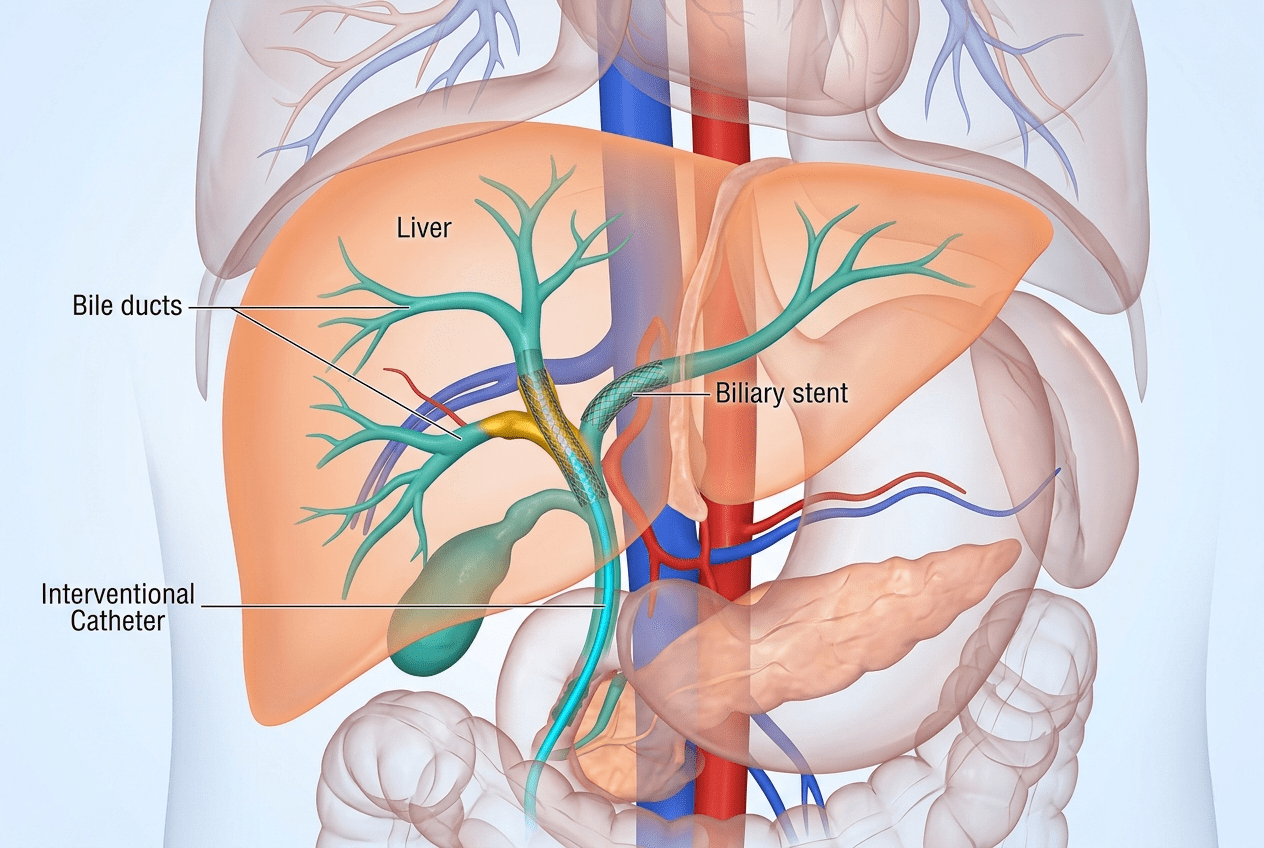
Biliary drainage procedures are minimally invasive interventional radiology treatments used to relieve bile duct obstruction and restore normal bile flow from the liver to the intestine. Using image guidance, a catheter and/or stent is placed within the bile ducts to bypass or open blockages caused by tumors, gallstones, inflammation, or scarring. These procedures effectively reduce jaundice, infection risk, and liver dysfunction while avoiding open surgery.
Internal drainage directs bile back into the digestive system using a stent, while external drainage allows bile to drain outside the body through a catheter. The approach is tailored to the patient’s condition, providing symptom relief, improving liver function, and supporting further medical or cancer treatments.
Internal links: Liver & Biliary Interventional Procedures, Oncology Interventional Procedures, Catheter Insertion / Stent Placement
Biliary drainage procedures are well-established and generally safe when performed by experienced interventional radiologists. Possible risks include infection, bile leakage, bleeding, or stent blockage over time. These risks are carefully minimized through image guidance, sterile technique, and close follow-up care.
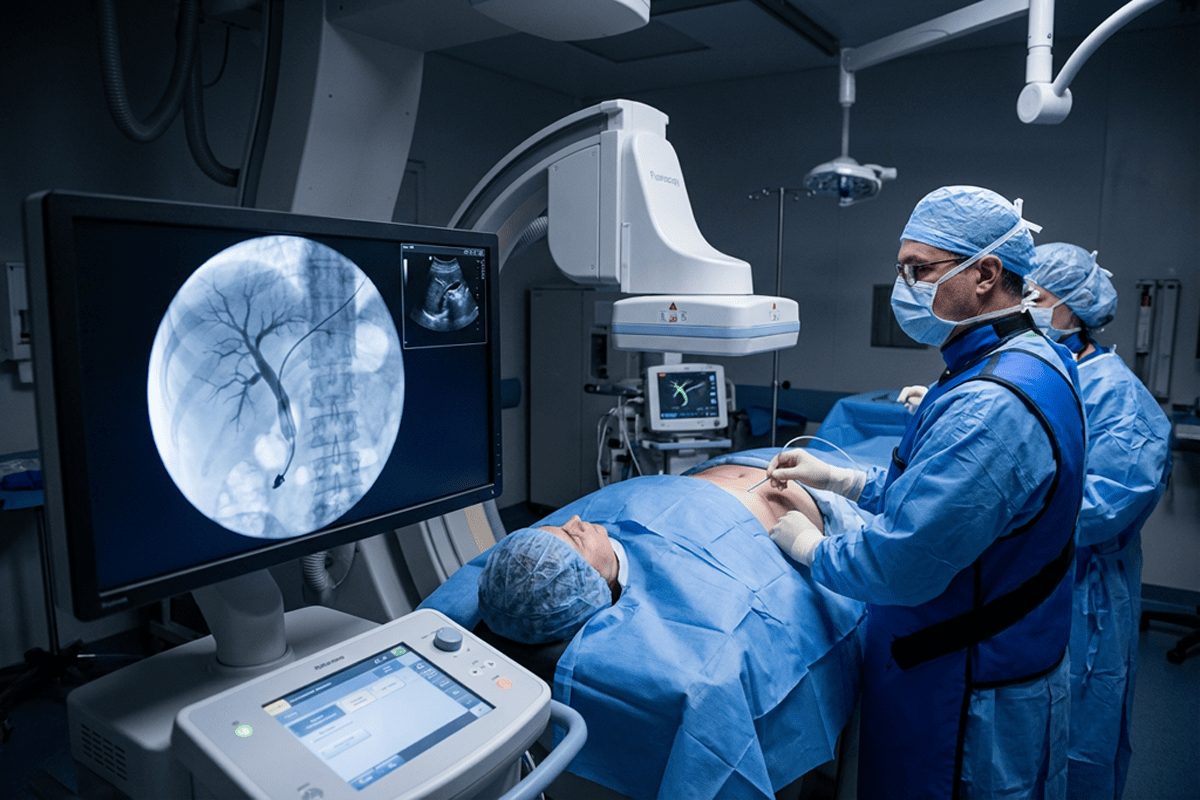
Internal drainage uses a stent to direct bile into the intestine, while external drainage allows bile to exit through a catheter outside the body. Your doctor will recommend the best option based on the blockage and overall health.
Many patients notice improvement within a few days as bile flow is restored. Full recovery depends on the underlying cause of the obstruction.
Most patients experience minimal discomfort. Local anesthesia and sedation help ensure the procedure is well tolerated.
Some stents are designed for long-term use, especially in cancer-related blockages. Regular follow-up ensures the stent continues to function properly.
With a commitment to patient comfort, our clinic combines cutting-edge interventional radiology with compassionate care.
connect@drsudhirvasistha.com
Copyright © 2026 All Rights Reserved. Dr. Sudhir Vasistha | Design, Developed & Powered by Better Choice