
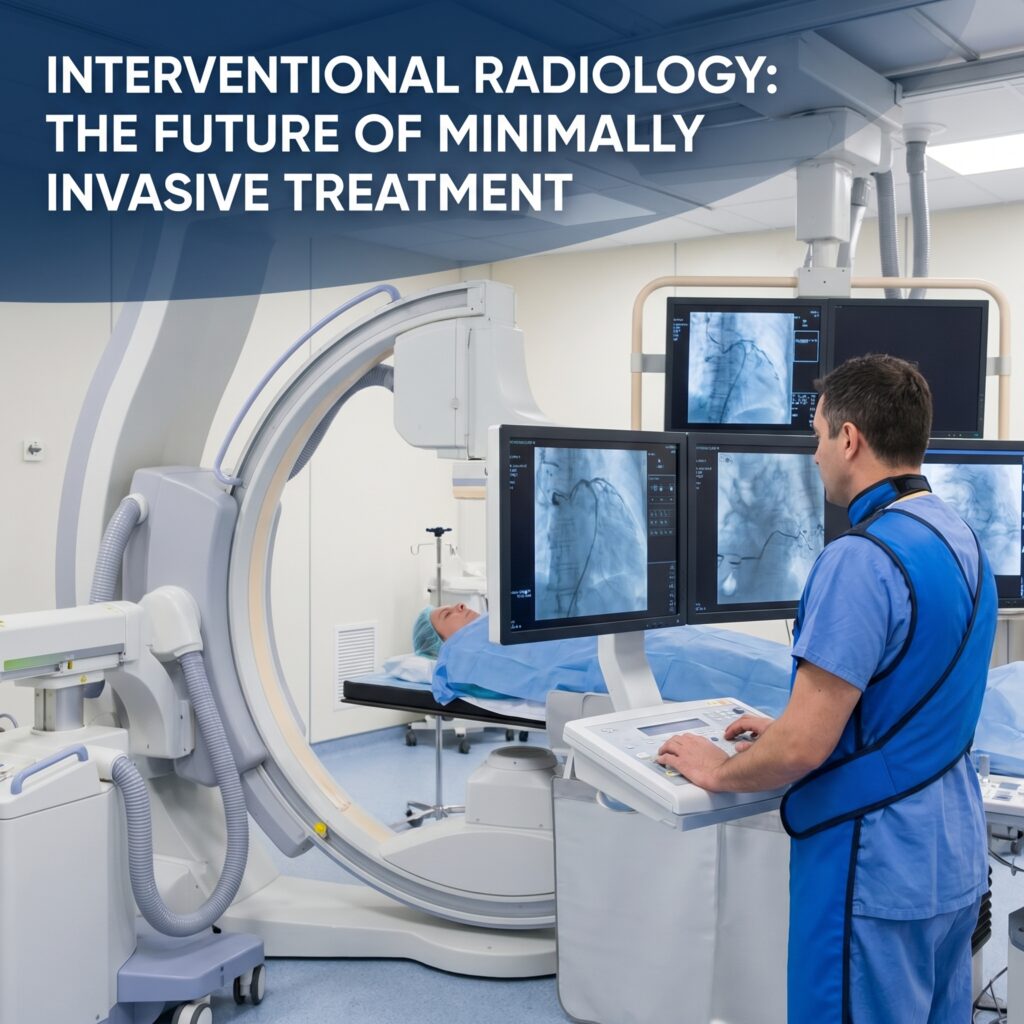
Over the years medical science has come a long way, and one of the most amazing strides in the field of health and medicine today is Interventional Radiology (IR). Although this specialty is not yet widely recognized, Interventional Radiology is changing the way a number of medical conditions are treated by providing minimally invasive options to conventional surgery.
Interventional Radiology is a specialized type of radiology that utilizes advanced imaging technologies like ultrasound, CT scans, fluoroscopy, MRI, and more to diagnose and treat diseases with precision. These procedures are done with small tubes (catheters, needles, and wires) instead of large cuts in the skin.
The primary benefit of Interventional Radiology is that it aims to minimize pain, risk, and recovery time for patients. There are some treatments that can be finished in a few hours, and in some instances, the patient may be able to leave the hospital on the same day. Minimally invasive surgery typically causes less bleeding, smaller scars, shorter hospital stays, and a quicker recovery than traditional surgery.
Interventional Radiology is applied to a variety of medical problems. These include uterine fibroids, an enlarged prostate, varicose veins, liver disease, blood vessel disease, various cancers, and chronic pain and bleeding in the internal organs. Embolization, angioplasty, stenting, tumor ablation, and image-guided biopsies are now very effective treatment options for many patients.
Another key element to Interventional Radiology is precision. As the procedures are guided using real-time imaging, doctors can directly attack the affected area without disturbing the surrounding healthy tissue. This way, the treatment is safer and more efficient.
The healthcare industry is constantly changing, and patients are seeking treatment that will be effective without being too invasive. That’s where Interventional Radiology is filling the gap by combining medical expertise and state-of-the-art technology to achieve better patient care. Interventional Radiology is now one of the fastest-growing areas of modern medicine and remains a significant component of enhancing the quality of patient care in several areas.