
Patients nowadays have more choices for medical treatment than ever before. In addition to the traditional surgical options, minimally invasive options are growing in popularity and the number of patients choosing them due to medical technology. Patients can make informed health care decisions if they are aware of the distinction between these two methods.
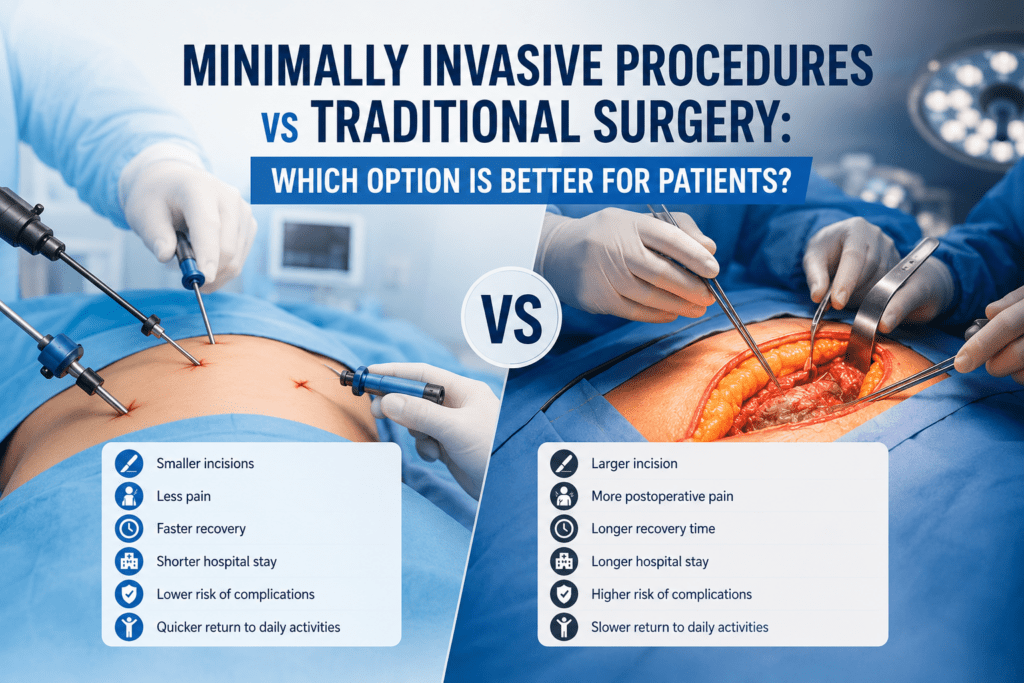
Typical surgery requires big incisions to reach the affected site within the body. It is always needed for many complicated conditions but may be associated with longer hospital stays, more pain, higher risk of complications, and longer recovery periods. Patients can take several weeks or months to recover completely from major surgery.
Minimally invasive procedures, however, are procedures that are used to treat medical conditions with very small incisions or openings with needles. The treatments are typically done with image guidance technologies like ultrasound, CT scans, or fluoroscopy. Specialized tools, such as catheters and thin tubes, are used by doctors to reach the targeted area without requiring very large cuts.
There are many benefits to a minimally invasive treatment, but speed of recovery is one of the biggest. Less damage to body tissues means reduced pain, very little scarring, and less blood loss for the patient. Most patients are able to go home the same day or the next day after the procedure.
One of the other benefits is reduced risk. Smaller incisions will decrease the risk of infection or other surgery-related complications. This is particularly advantageous for older patients or patients who have other medical conditions that may make surgery more dangerous.
Modern uses of minimally invasive procedures include the treatment of fibroids, an enlarged prostate, blocked arteries, varicose veins, tumors, chronic pain, and internal bleeding. Such measures are increasingly being adopted in various medical specialties due to their efficacy and patient-friendly nature.
When it comes to choosing between minimally invasive treatment and traditional surgery, however, the decision will be made based on the patient’s condition, the severity of the disease, and the patient’s overall health. It is always crucial to have a proper medical evaluation before deciding on the most effective course of treatment.
With the current development of modern healthcare, treatments are getting safer, more accurate, and less invasive to the patient’s life. Minimally invasive procedures are playing a major role in shaping that future.