Pain & Palliative Interventional Procedures | Interventional Pain Management Procedures
Embolization | Age: Adults | Geriatrics
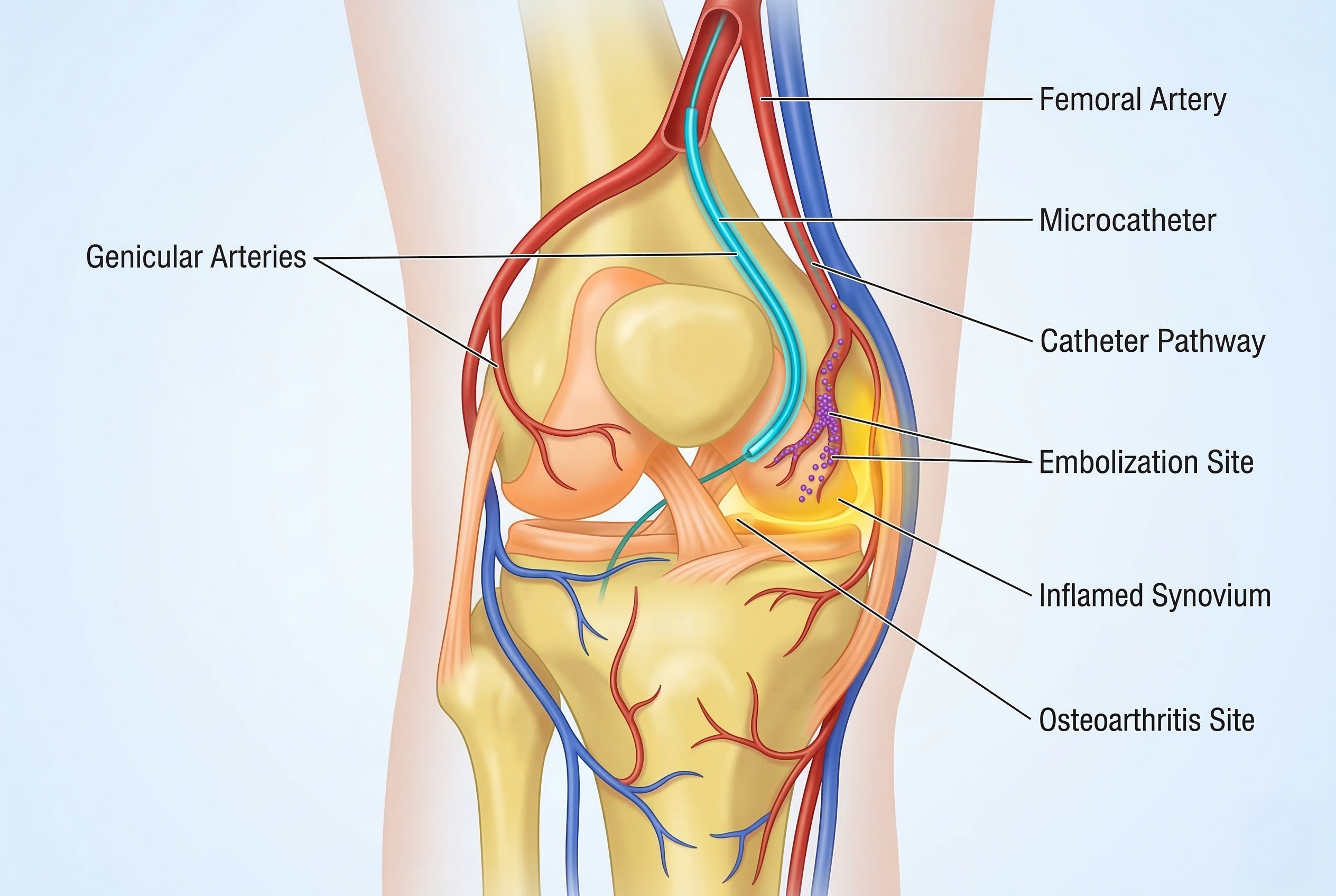
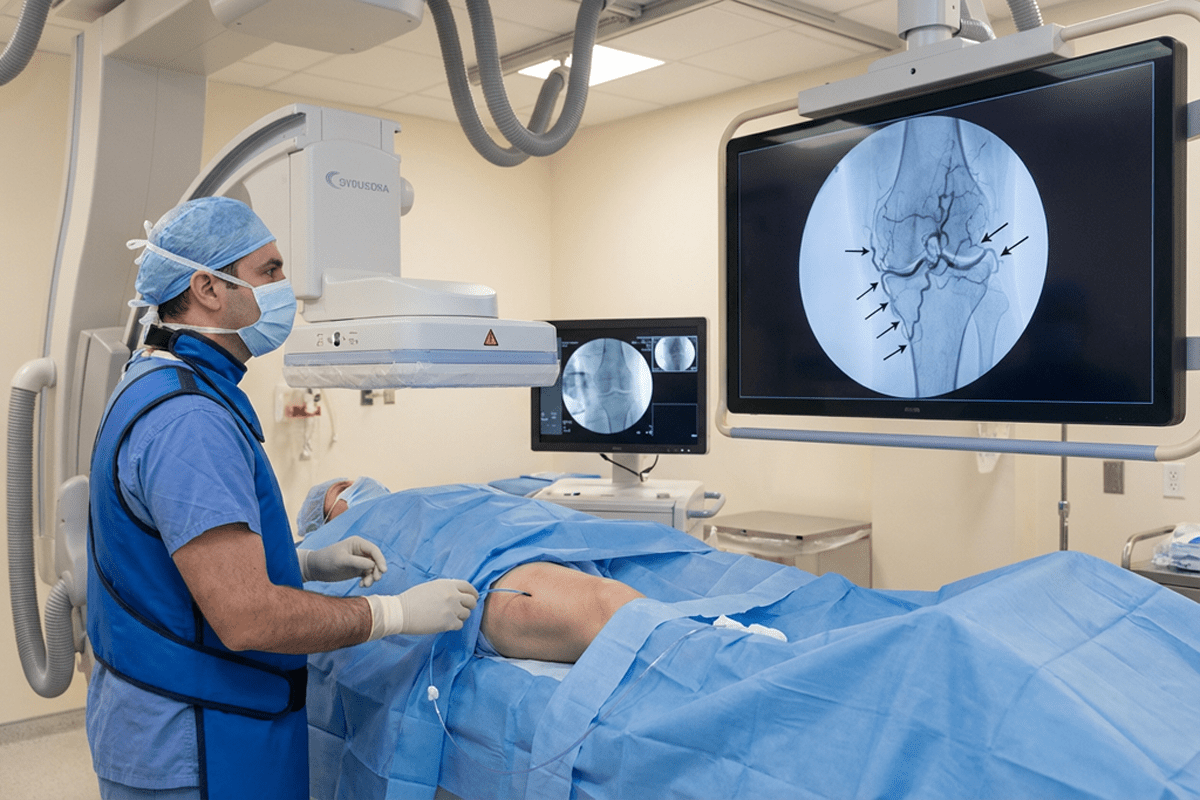
Genicular Artery Embolization (GAE) is a minimally invasive interventional radiology procedure designed to reduce chronic knee pain caused by osteoarthritis. The treatment works by targeting abnormal blood vessels around the knee joint that contribute to inflammation and pain. Using image-guided catheter techniques, tiny embolic particles are delivered to selectively reduce excess blood flow, helping decrease inflammation while preserving healthy joint structures and mobility.
GAE is an effective alternative for patients who have persistent knee pain despite medications, physical therapy, or injections and wish to avoid knee replacement surgery. Performed as an outpatient procedure, GAE offers long-lasting pain relief, improved function, and faster recovery with a strong safety profile.
Internal links: Pain & Palliative Interventional Procedures, Interventional Pain Management Procedures, Embolization
Genicular artery embolization is considered safe when performed by experienced interventional radiologists. Possible side effects include temporary knee discomfort, bruising, or swelling. Serious complications are rare, and careful imaging guidance helps protect surrounding tissues and blood supply.
Yes, many patients experience significant and lasting pain relief. GAE helps reduce inflammation that drives osteoarthritis-related knee pain.
Pain relief can last months to years. Results vary based on disease severity and individual response.
For many patients, yes. GAE avoids major surgery, anesthesia risks, and long rehabilitation associated with knee replacement.
GAE is ideal for patients with moderate to severe knee pain who want a minimally invasive option or are not ready for surgery.
With a commitment to patient comfort, our clinic combines cutting-edge interventional radiology with compassionate care.
connect@drsudhirvasistha.com
Copyright © 2026 All Rights Reserved. Dr. Sudhir Vasistha | Design, Developed & Powered by Better Choice