Oncology Interventional Procedures | Interventional Vascular Peripheral Arterial Procedures
Embolization | Age: Adults
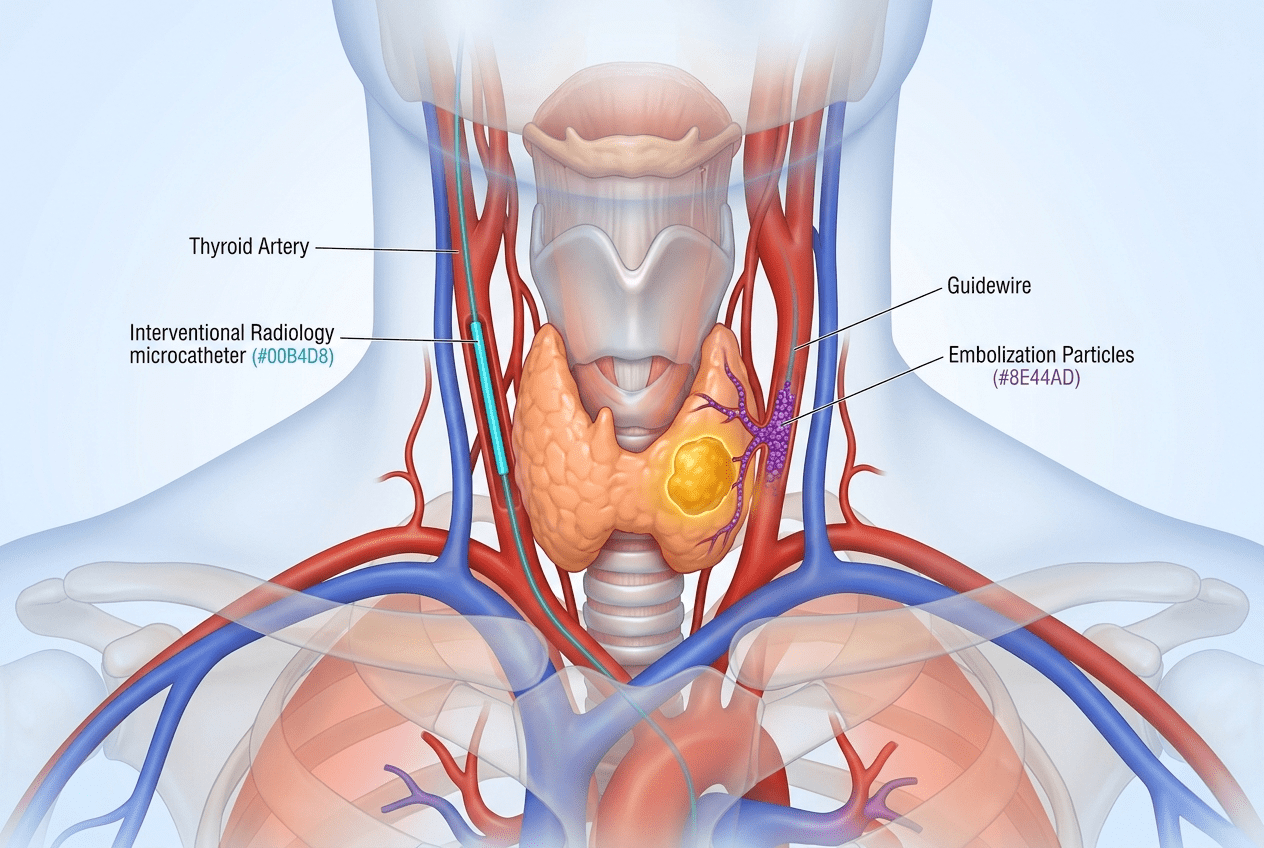
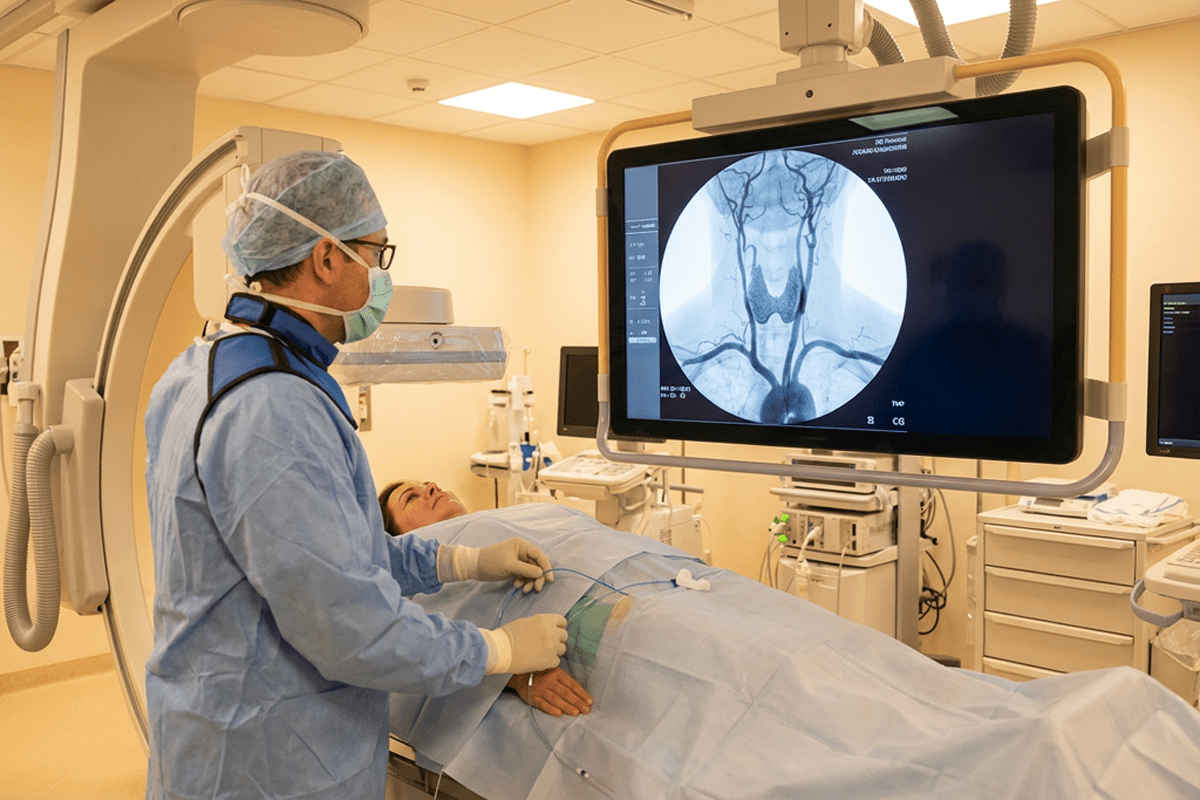
Thyroid artery embolization is a minimally invasive interventional radiology procedure used to treat symptomatic goitre and thyroid nodules by reducing their blood supply. Using image-guided angiography, tiny embolic particles are delivered into selected thyroid arteries, leading to gradual shrinkage of enlarged thyroid tissue. This targeted approach relieves pressure symptoms, improves cosmetic appearance, and reduces nodule-related discomfort without open surgery.
The procedure is an effective alternative for patients who are not ideal candidates for thyroid surgery or wish to avoid scars and long recovery. Thyroid artery embolization preserves thyroid function in many cases and offers symptom relief with shorter hospital stays and lower complication risk.
Internal links: Oncology Interventional Procedures, Interventional Vascular Peripheral Arterial Procedures, Embolization
Thyroid artery embolization is generally safe when performed by experienced interventional radiologists. Temporary pain, mild fever, or transient changes in thyroid hormone levels may occur. Serious complications are rare, and careful vessel selection helps protect normal thyroid tissue and surrounding structures.
Yes, many patients experience significant reduction in goitre size and symptom relief. Results continue to improve over several months.
Most patients maintain normal thyroid function. Temporary changes can occur and are monitored with blood tests.
Embolization avoids surgery, scars, and general anesthesia. Recovery is faster, and complication rates are typically lower.
It is ideal for patients with benign nodules or goitre who want a minimally invasive alternative to surgery or are not surgical candidates.
With a commitment to patient comfort, our clinic combines cutting-edge interventional radiology with compassionate care.
connect@drsudhirvasistha.com
Copyright © 2026 All Rights Reserved. Dr. Sudhir Vasistha | Design, Developed & Powered by Better Choice