Men’s Health Interventional Procedures | Interventional Genitourinary Procedures
Embolization | Age: Adults | Geriatrics
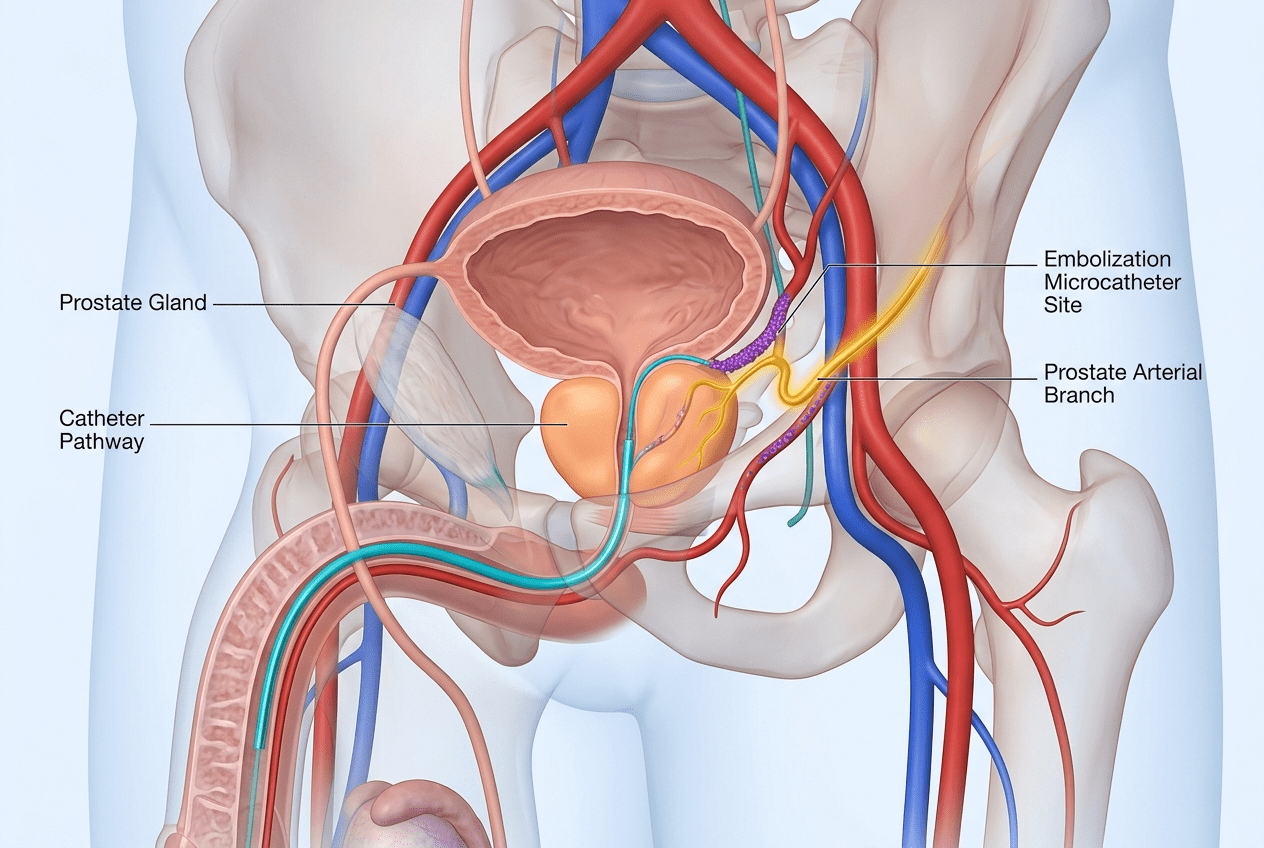
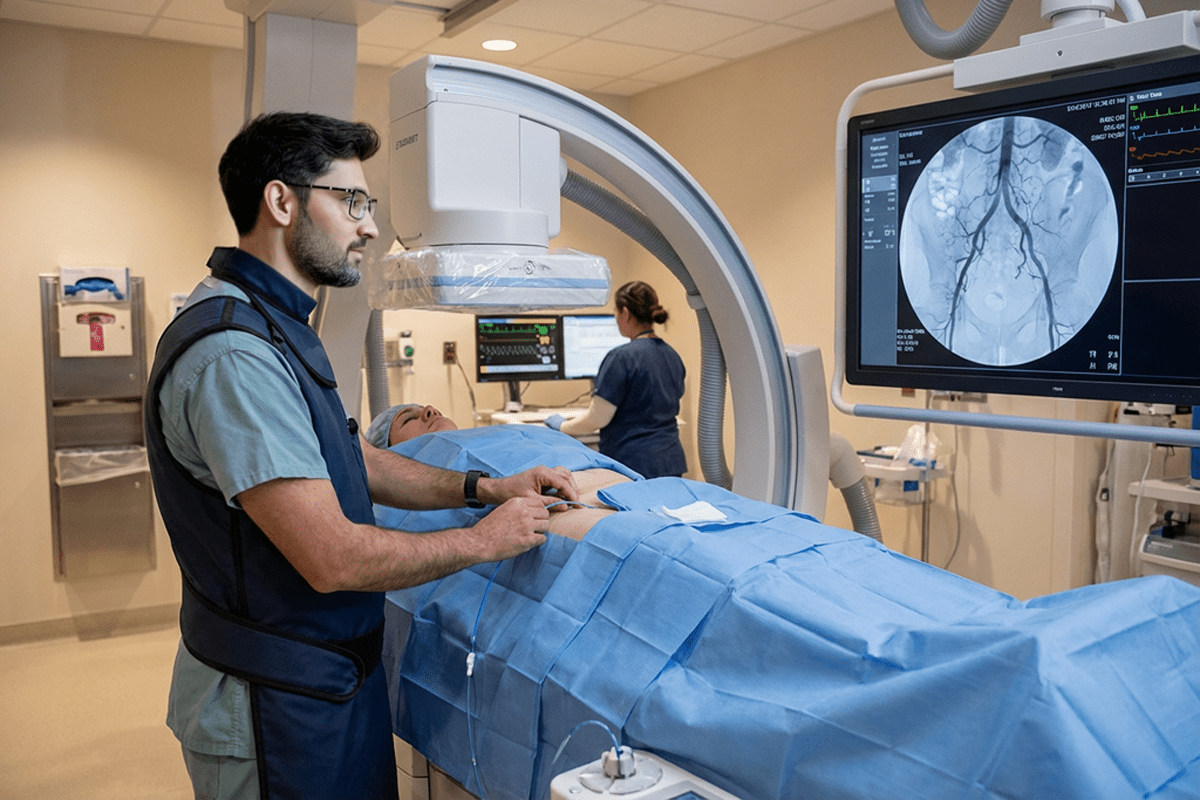
Prostate Artery Embolization (PAE) is a minimally invasive interventional radiology procedure used to treat benign prostatic hyperplasia (BPH), a noncancerous enlargement of the prostate gland. Using image-guided angiography, tiny embolic particles are delivered into the arteries supplying the prostate, reducing blood flow and causing the gland to shrink over time. This leads to significant improvement in urinary symptoms without surgery or prostate removal.
PAE is an effective alternative for men who want relief from BPH symptoms while avoiding invasive surgery. It is performed as an outpatient procedure and preserves sexual function, making it a preferred option for patients who are not ideal surgical candidates or wish to avoid long recovery periods.
Internal links: Men’s Health Interventional Procedures, Interventional Genitourinary Procedures, Embolization
PAE is considered safe and well established when performed by experienced interventional radiologists. Temporary side effects may include pelvic pain, mild fever, or urinary irritation. Serious complications are uncommon, and careful imaging guidance helps minimize risk and protect surrounding organs.
Yes, PAE has been shown to significantly reduce prostate size and improve urinary symptoms in many men. Results continue to improve over several months.
PAE is designed to preserve erectile and ejaculatory function. Unlike some surgical treatments, sexual side effects are uncommon.
Some symptom relief may be noticed within weeks, with continued improvement over three to six months as the prostate shrinks.
PAE is ideal for men with moderate to severe BPH symptoms who want a minimally invasive alternative to surgery or are not surgical candidates.
With a commitment to patient comfort, our clinic combines cutting-edge interventional radiology with compassionate care.
connect@drsudhirvasistha.com
Copyright © 2026 All Rights Reserved. Dr. Sudhir Vasistha | Design, Developed & Powered by Better Choice